
May 21, 2025
A new study published in Nature Communications, led by Associate Professor Richard Tothill of the Rare Disease Oncogenomic (RADIO) Lab at the Collaborative Centre for Genomic Cancer Medicine, aims to demonstrate the potential of Whole Genome and Transcriptome Sequencing (WGTS) to improve precision treatment and identify a tissue of origin for patients with Cancer of Unknown Primary (CUP).
WGTS is the process of analysing a biological sample in attempt to reveal a patient's genome, commonly known as their DNA, and their transcriptome, known as the RNA (which carries instructions from the DNA). Understanding this information can reveal the known cancer-causing mutations which may have targeted treatments.

The study was a joint venture between the University of Melbourne and Peter Mac, comparing the performance of WGTS to standard gene panel testing within a retrospective cohort of 72 CUP patients.
The research was conducted in collaboration with Professor Linda Mileshkin, the Director of Medical Oncology and lead of the CUP Clinic at Peter Mac. Professor Mileshkin also leads multiple studies aimed to improve the outcomes of those with Cancer of Unknown Primary, including SUPER and FAPI studies; SUPER-NEXT, SUPER-ED and FAPI-CUP.
Study first author Dr Richard Rebello, a post-doctoral scientist within the RADIO Lab, said the results demonstrated that WGTS detected all reportable mutations identified by panel testing, and uncovered additional clinically relevant features in 76% of cases.
Dr Rebello stated, "Although gene panel sequencing can detect many approved therapeutic targets, our findings show that WGTS increases the diagnostic yield and broadens the treatment options for CUP patients."
The research found WGTS suggested potential treatment options for 79% of the cohort, which was a significant improvement to the 55% of panel testing. This enabled 24% more patients to potentially be eligible for standard-of-care therapies and phase 1 & 2 clinical trials.
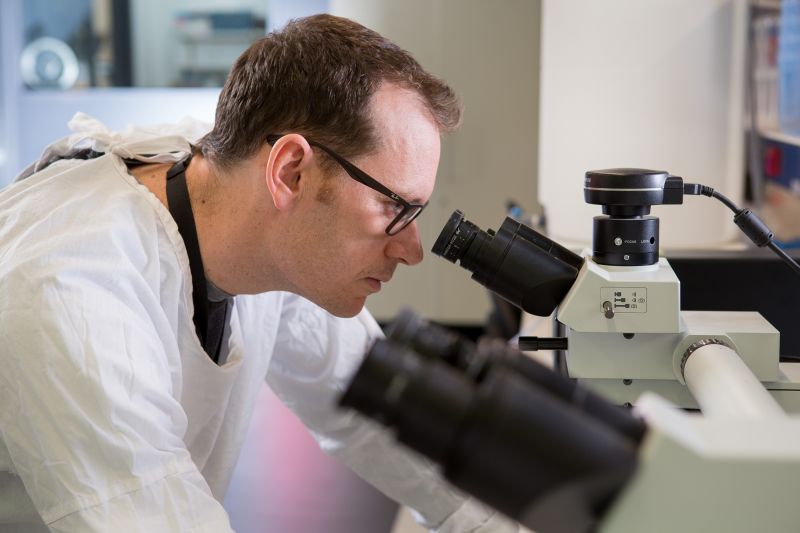
Associate Professor Richard Tothill explained "A major benefit to using WGTS testing is the ability to identify a likely tissue of origin of the CUP tumour".
"To resolve a tissue of origin, we used a deep curation to identify individual diagnostic features, as well as the CUP prediction algorithm (CUPPA) training on WGTS data from known primary cancers - a method developed by the Peter Priestley at the Hartwig Medical Foundation."
“When these combined strategies were used, 77% of CUP cases had a probable tissue of origin identified by WGTS, outperforming panel testing, which assisted tissue of origin diagnosis in only 34% of cases.”
Professor Mileshkin said: “We have shown that genomic tests that can help to resolve the primary cancer type diagnosis as well as guide targeted treatments are needed to improve outcomes for CUP patients”.
“Currently access to PBS-funded drug therapies as well as clinical trials is often restricted by cancer type rather than the molecular profile of the cancer which can limit access to treatment for patients with CUP.”

“Our findings could enable more equitable access to precision testing for CUP patients in the future, especially in regional areas where collecting fresh tissue samples is logistically challenging,” said Associate Professor Tothill.
“While wider acceptance of these genomic tests will require further validation, our work has importantly highlighted the potential of WGTS to improve precision treatment and tissue of origin diagnosis for CUP patients, offering hope for better outcomes in these challenging cancer cases.”
To read the report in full, please click here.
Credit: Danny Rose, Media and Content Manager, Peter MacCallum Cancer Centre